How Basement Waterproofing NJ Protects Finished Spaces and Home Offices

A basement changes the way a house functions. It can be a family room, guest suite, workout area, media space, storage hub, or a quiet home office separated from the noise upstairs. In New Jersey, where heavy rain, seasonal humidity, and older housing stock often collide, that lower level can also become the part of the home most vulnerable to water damage. That risk grows the moment a basement is finished with drywall, flooring, trim, electronics, or office furniture.
People often think of basement water as a dramatic event, a storm that sends inches of water across the floor. That does happen, but the more common problem is slower and less obvious. Moisture seeps through foundation walls. Humid air condenses on cool surfaces. Minor seepage at a wall-floor joint goes unnoticed behind storage boxes. A finished basement can hide trouble for months, sometimes years, until carpet smells musty, baseboards swell, or a desk chair starts rusting at the legs.
That is why Basement Waterproofing NJ matters so much for homeowners who use below-grade space every day. Waterproofing is not just about keeping a basement dry in the broad sense. It is about protecting the investment made in a finished space, preserving indoor air quality, and making sure a home office remains dependable through every season.
Finished basements fail quietly before they fail dramatically
Unfinished basements give you visual clues. If water enters, you can usually spot it on concrete. In a finished basement, the warning signs are muffled. Insulation and framing conceal damp walls. Vinyl plank flooring can trap moisture beneath it. A dehumidifier may reduce the smell without addressing the source. By the time the issue becomes obvious, the damage bill is no longer small.
I have seen homeowners spend tens of thousands finishing a lower level and only a few hundred on stopgap fixes for seepage. A bead of caulk near a crack, a fresh coat of waterproof paint, or an extra area rug can make the basement look under control for a season. Then a wet spring arrives, groundwater pressure builds outside the foundation, and the water finds the path of least resistance.
What gets damaged first depends on how the basement was built. https://lorenzohgab682.laurelcurrent.com/posts/basement-waterproofing-nj-techniques-that-work-in-flood-prone-areas Carpeting absorbs moisture and traps odor. Engineered wood flooring can cup or separate. Drywall wicks moisture upward, so the bottom 12 to 24 inches may need replacement even if the leak looked minor. In a home office, paper records curl, printer components corrode, surge protectors fail, and computers sit in a room where humidity alone can shorten their life.
The frustrating part is that much of this damage comes from moisture exposure that never looks severe in the moment. A single damp summer may not ruin the room. Three summers in a row often will.
New Jersey basements face a particular mix of water problems
Not every state puts the same stress on below-grade spaces. New Jersey creates a tough combination for basements because conditions vary widely, yet water pressure and humidity remain common themes across many properties.
Some homes deal with high water tables. Others sit in neighborhoods with clay-heavy soil that drains poorly and expands when wet. Many older houses have foundations that were solidly built for their era but never intended to support a fully conditioned, finished living space with modern expectations for comfort. Add in nor'easters, summer downpours, snowmelt, and freeze-thaw cycles, and small vulnerabilities become recurring issues.
A basement may take on water for several different reasons at once. Surface runoff from poor grading can collect around the foundation. Clogged or undersized gutters can dump roof water too close to the house. Hydrostatic pressure can push water through porous concrete or masonry. Window wells can fill during a storm. A sump pump can fail during a power outage, which tends to happen at the exact moment it is needed most.
This is where Basement Waterproofing NJ becomes a local issue rather than a generic one. The right solution depends on how water behaves on that site, around that foundation, during that season. There is no single fix that works for every house.
Why finished spaces raise the stakes
An unfinished basement is often treated as tolerant of a little dampness. A finished basement is not. Once you install drywall, recessed lights, built-ins, flooring, and furnishings, the margin for error narrows sharply.
A lower-level family room may contain a sectional sofa, television, game consoles, and custom shelving. A guest room may have upholstered furniture and mattresses, both difficult to salvage after prolonged moisture exposure. A home gym might look durable, but rubber flooring can trap moisture underneath, and metal components on fitness equipment corrode faster in damp air than many owners expect.
A home office is even more sensitive. Workspaces depend on reliability. Most people cannot afford to lose a workday because the internet equipment was unplugged during seepage cleanup, or because the office smells musty enough to trigger headaches. If the basement office doubles as a video call space, moisture damage has another cost that rarely appears on repair estimates: distraction, embarrassment, and lost productivity.
One homeowner in central New Jersey had what looked like a harmless issue, a slight musty smell in a finished office after summer rain. There was no visible standing water. When the lower portion of one wall was finally opened, the backside of the drywall showed mold growth, the insulation was damp, and the bottom plate had begun to discolor. The office equipment was fine, but the room itself was not healthy to spend eight hours a day in. The eventual repair involved not just drying but partial demolition, waterproofing improvements, and reconstruction. The room was out of service for weeks.
That is the hidden cost of postponing proper waterproofing. The damage spreads behind the finishes that were meant to make the basement livable.
Water is only part of the story, humidity does real damage too
Homeowners sometimes say, “We don’t get flooding, just dampness.” That distinction matters less than they think. A damp basement can be almost as destructive to a finished environment as occasional minor seepage.
Relative humidity that remains elevated through spring and summer feeds mold growth, encourages dust mites, and creates that heavy basement smell that no candle ever solves. It can also warp wood trim, loosen adhesives, and create condensation on HVAC ducts or cool surfaces. In a home office, high humidity affects comfort first, then equipment and materials over time.
Paper absorbs moisture. Cardboard storage boxes weaken. Leather office chairs can mildew. Even if electronics do not fail outright, damp conditions are hard on contacts, plugs, and moving parts. Printers and backup drives especially dislike unstable environmental conditions.
This is one reason a serious waterproofing plan often includes moisture management beyond leak control. A basement can appear “dry” to the eye and still remain too humid to support a healthy finished space. Waterproofing in practice often overlaps with air sealing, drainage correction, sump systems, vapor control, and dehumidification. Treating only one piece of the problem rarely works for long.
What effective basement waterproofing usually involves
The right waterproofing scope depends on the source of the problem, but the most successful projects start with diagnosis, not products. Homeowners are often tempted to ask whether they need interior waterproofing, exterior waterproofing, a sump pump, or crack repair. Those are valid questions, but they are second questions. The first question is where the water or moisture is coming from, and under what conditions.
A contractor with real basement experience will usually examine grading, downspout discharge, foundation wall condition, existing drainage systems, visible cracks, efflorescence, past patchwork repairs, window wells, and the age and layout of the home. They will also ask when the problem occurs. Only after prolonged rain? Only in spring? Only when snow melts? Constantly humid even without storms? Those details matter.
Most solutions fall into a few categories:
- Managing roof and surface water before it reaches the foundation
- Relieving subsurface water pressure with interior drainage and sump systems
- Sealing or repairing entry points such as cracks and penetrations
- Controlling humidity with proper ventilation strategy and dehumidification
- Rebuilding finished materials with moisture-aware design choices
That list looks simple on paper, but real houses complicate it. Exterior excavation may be the best fix for one wall but impractical on another because of hardscaping, additions, or access limits. An interior drainage system can be highly effective, but it should not be treated as permission to ignore obvious grading problems outside. A sump pump may solve recurring seepage, yet without battery backup it remains vulnerable during storms that knock out power.
The quality of design and installation matters more than the marketing language around it.
Exterior water control often delivers the biggest payoff
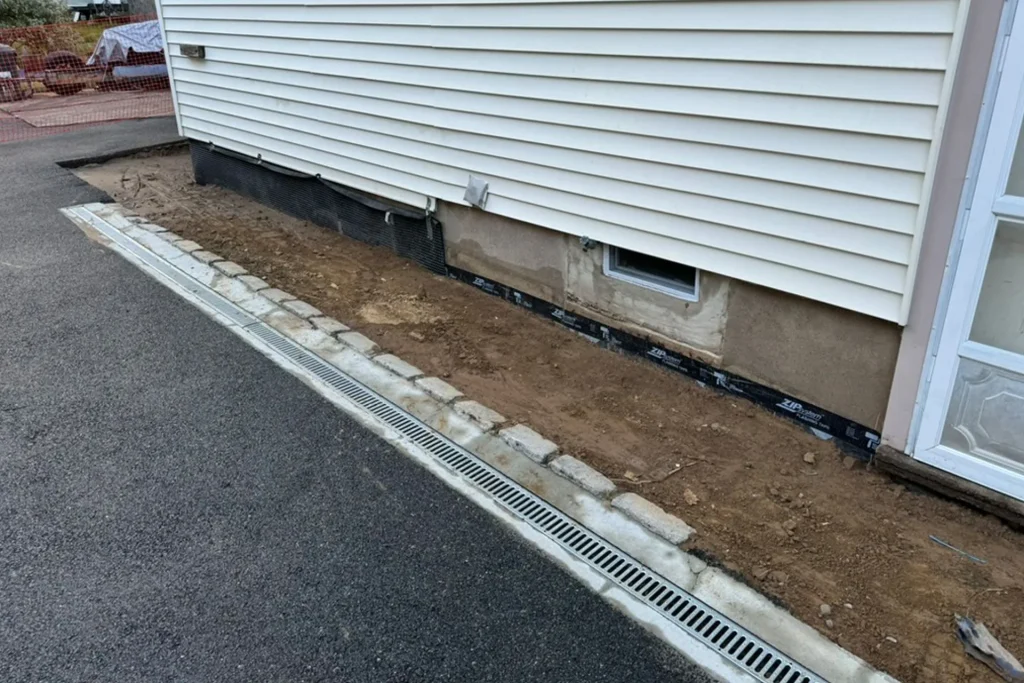
Some basement problems begin so far above the foundation that homeowners never connect the dots. A short downspout extension that dumps roof runoff beside the house can saturate soil repeatedly. Soil that slopes toward the foundation can funnel stormwater exactly where it does the most harm. Mulch beds built up over years can hide that reverse slope. Even a patio pitched the wrong way can contribute to trouble.
Correcting these issues is often less disruptive than tearing into a finished basement after damage occurs. Extending downspouts, regrading around the foundation, adjusting hardscape drainage, and maintaining gutters are not glamorous measures, but they work because they reduce the water load imposed on the structure.
This is also where judgment matters. Not every damp basement needs a large interior system immediately. If the problem is clearly tied to runoff management and the basement has no signs of persistent groundwater pressure, exterior corrections may significantly improve conditions. On the other hand, if water enters at the cove joint during sustained wet periods, that often points to pressure beneath or beside the slab, and interior drainage may be more appropriate.
Homeowners sometimes want the least invasive fix, which is understandable. The best answer is not always the least invasive one, though. It is the one that actually matches the mechanism of water entry.
Interior drainage systems protect finished rooms from recurring seepage
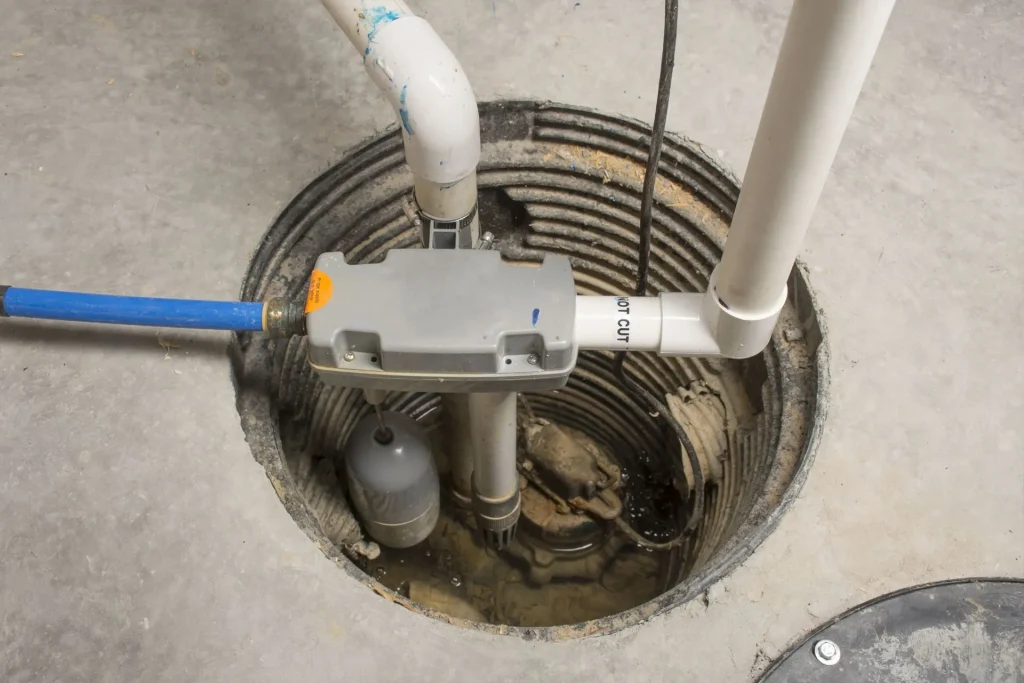
For many New Jersey homes, especially those with recurring water at the perimeter, an interior drainage system paired with a sump pump is the most practical defense. These systems collect water before it reaches the finished surface and direct it to a sump basin where it can be pumped away from the home.
When installed well, they can turn an unreliable basement into a usable living area. But the details matter. The discharge line must carry water far enough away from the foundation. The sump pump should be sized appropriately, and in a finished basement used daily, battery backup is often worth the added cost. Alarm features are another smart layer of protection, especially for homeowners who travel or work long hours away from home.
If the basement contains a home office, I usually think about resilience rather than minimum compliance. The room is not just storage. It is a place where work happens, meetings happen, and electronics live. A primary pump without backup may be adequate on paper, but it leaves too much to chance in a major storm.
One practical benchmark is this: if losing dryness in that basement would interrupt your income, damage expensive built-ins, or force a room out of service for weeks, invest in redundancy.
Finished basement design should anticipate moisture, not deny it
A basement below grade is never exactly the same as a room on the second floor. Even a well-waterproofed one has to be finished with that reality in mind. Smart material choices can limit damage if a moisture event occurs and can also improve day-to-day durability.
This is where many remodeling projects miss the mark. Homeowners choose finishes based on appearance alone, then learn that the prettiest materials are not always the most forgiving below grade. Wall systems, flooring, and trim should be selected with moisture tolerance in mind. Some products recover better than others after incidental exposure.
For finished basements and offices, a few principles hold up well in practice:
- Avoid materials that soak up water quickly and dry slowly
- Leave access to critical mechanicals and sump equipment
- Use flooring and trim that tolerate occasional moisture better than traditional wood products
- Keep valuable electronics and records elevated off the floor
- Plan dehumidification as part of the room, not as an afterthought
Those choices do not replace waterproofing, but they complement it. They reduce the cost and disruption if a problem ever occurs, and they make the space more stable in normal seasonal humidity.
I have seen beautifully designed basement offices that included custom cabinetry but no thought to monitor placement, cable routing, or storage elevation. All it takes is one minor water event to make that oversight expensive. Raising equipment a few inches, using metal or composite legs on furniture, and keeping paper archives in sealed containers can make a meaningful difference.
The home office angle is easy to underestimate
A finished rec room can be inconvenient to lose for a while. A home office can be a direct business problem. Since remote and hybrid work became common, many households depend on basement offices every weekday. That changes how owners should think about risk.
A wet basement office is not just a cleanup issue. It can interrupt calls, damage data, create air quality concerns, and force someone to work from a kitchen counter for an extended period. If two adults work from home and one uses the basement, the impact doubles. The value of reliable waterproofing becomes easier to understand when you compare it to the cost of downtime.
Even apart from emergencies, comfort affects work quality. A basement office with stable humidity, no musty odor, and no nagging worry about the next storm is easier to use for long stretches. People focus better in spaces that feel secure and healthy. That may sound intangible, but anyone who has tried to work next to a damp wall or a noisy emergency dehumidifier knows it is real.
There is also a client-facing side. More professionals now take video meetings from home offices. Background appearance matters, but so does confidence. A room that smells damp, has bubbling paint, or needs fans running after every storm does not support professional work.
Warning signs homeowners should not ignore
The earliest clues are usually subtle. A faint odor after rain. A corner of carpet that feels cool or slightly damp. White chalky residue on masonry. Peeling paint near the bottom of a wall. Rust on the feet of a filing cabinet. Condensation on pipes or windows that seems excessive.
People often explain these away because the room still feels usable. That is understandable, but basement problems almost always become more expensive as time passes. Moisture that reaches framing or concealed insulation expands the scope of repair. It also makes diagnosis harder, because by the time visible damage appears, several pathways may be contributing.
If you notice signs repeatedly, it is worth documenting when they occur. Rainfall timing, duration, snowmelt, and humidity patterns can help distinguish between a drainage problem, a groundwater issue, and a general moisture control problem. That information is useful when discussing Basement Waterproofing NJ options with a contractor, because it moves the conversation from guesswork to patterns.
Why patch jobs disappoint so often
There is a reason homeowners become skeptical after trying “waterproof” paint or quick crack fillers. Many products sold for basement use address symptoms, not forces. If water is under pressure outside the wall or beneath the slab, a surface coating inside the basement has limited authority. It may hold for a while. It may also fail right where conditions are worst.
The same is true of cosmetic repairs after a leak. Replacing drywall without fixing the water source is not restoration, it is postponement. It can make the basement look normal while hidden materials remain vulnerable.
This does not mean every minor crack requires major intervention. Some isolated cracks can be professionally injected and remain stable. Some dampness is solved largely through exterior drainage correction and dehumidification. The point is that the fix needs to match the cause. Quick patches become expensive when they encourage homeowners to refinish damaged areas before the environment is truly under control.
The value of doing it before finishing, not after
The most cost-effective time to waterproof a basement is often before a major remodel or office build-out. Access is easier. Risk is easier to manage. And the homeowner can make sensible design decisions while walls and floors are still exposed.
Yet many projects reverse the sequence. The basement gets painted, floored, furnished, and wired for work. Only later does someone ask whether moisture has been fully addressed. That approach increases both financial exposure and disruption. Waterproofing a finished basement typically involves protecting furnishings, opening walls or floors, managing dust, and temporarily losing use of the room. Waterproofing beforehand is rarely convenient, but it is much cleaner.
For New Jersey homeowners planning a basement office, studio, guest suite, or family room, this is one of the best moments to evaluate the space honestly. Even if the basement has never had standing water, ask the harder questions. Does it smell damp in August? Are there signs of old seepage behind stored items? Do gutters overflow during storms? Has the sump system been tested recently, if there is one? Those answers tell you more about future performance than fresh paint ever will.
A dry basement protects more than finishes
The practical benefits are obvious. Finished floors last longer. Drywall stays intact. Furniture and equipment survive. But the real value of proper basement waterproofing is broader than building materials.
A dry basement supports indoor air quality for the entire home. It protects the time and money invested in finishing. It helps preserve resale appeal, because buyers notice basement odor and signs of moisture immediately. And when the basement serves as a home office, it safeguards consistency, which is what work from home depends on most.
Basement Waterproofing NJ is not a cosmetic upgrade. It is part of making lower-level space dependable enough to live and work in with confidence. When done thoughtfully, it turns a vulnerable part of the house into one of the most useful. That is what homeowners are really buying, not just dryness after a storm, but peace of mind every day the room is in use.
ARD Waterproofing
Address: 98 Smull Ave, West Caldwell, NJ 07006
Phone number: +12016465936
FAQ About Basement Waterproofing NJ
What is the best waterproofing method for a basement?
The best overall approach to waterproofing a basement is a combined exterior and interior system that stops water at the foundation wall and safely manages any moisture that gets through.
What is the average cost to waterproof a basement?
The average cost to waterproof a basement ranges from $2,500 to $15,000, with most homeowners paying around $5,200 for a complete project.
Can a basement be waterproofed from the inside?
Yes, a basement can be waterproofed from the inside, and it is often the most affordable and least disruptive method.
Ends · LANECFQC508